MA-FRA professional solutions
Request a quote
MA-FRA · Hydrophilic polymer drying agent

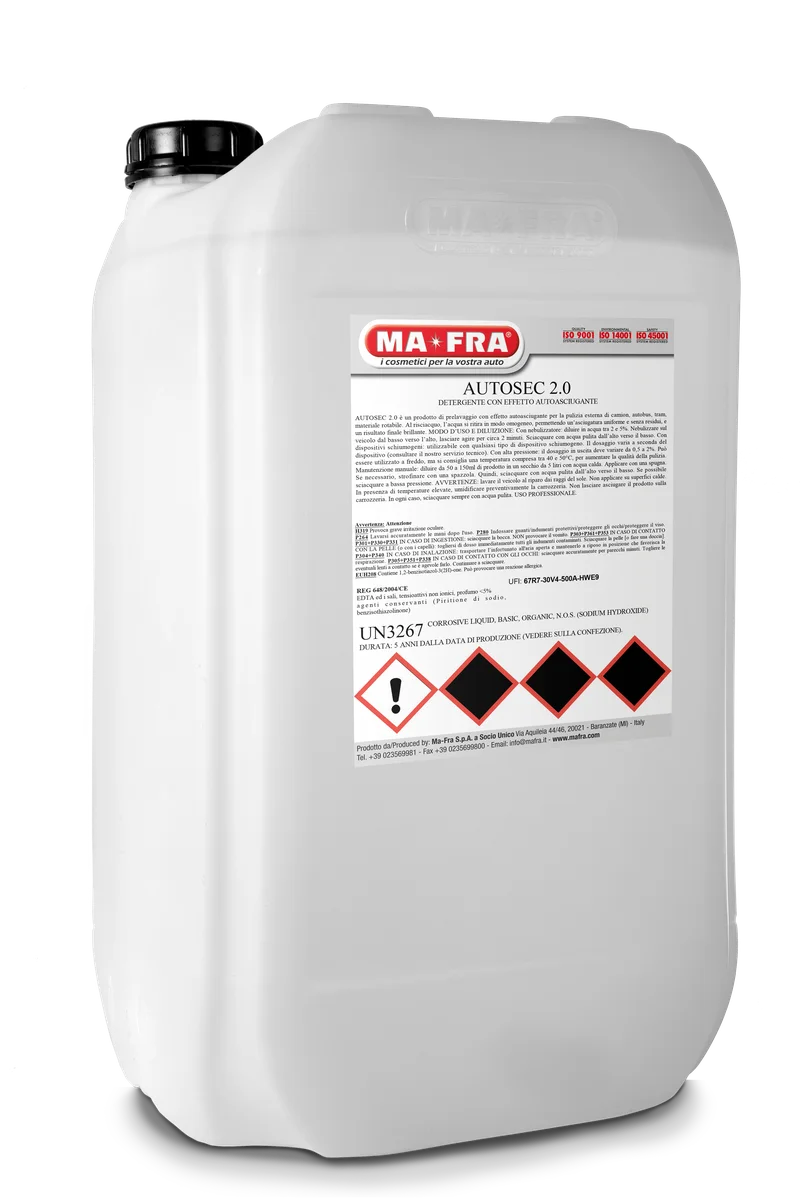
AUTOSEC: the hydrophilic polymer drying agent that dries vehicles without forced air and without rinsing.

AUTOSEC by MA-FRA is a concentrated hydrophilic drying agent with new-generation polymer technology, developed for wash plants where forced-air drying systems cannot be used. Its technology prevents water from fragmenting into countless drops, instead promoting a uniform film that drains off the large glass surfaces of buses, trains and metros.
New-generation polymer technology Ideal in plants without forced air Last step, no subsequent rinse No persistent foam
AUTOSEC — MA-FRA Professional
0
foam and waxy residue
polymer formula, no rinsing
Designed for Bus washing Trains, trams & metros Car rentals Fleets & trucks Plants without ventilation Single-brush & manual

The drying problem in plants without forced air

Where forced air cannot be used, drops and streaks stay on the large glass surfaces.

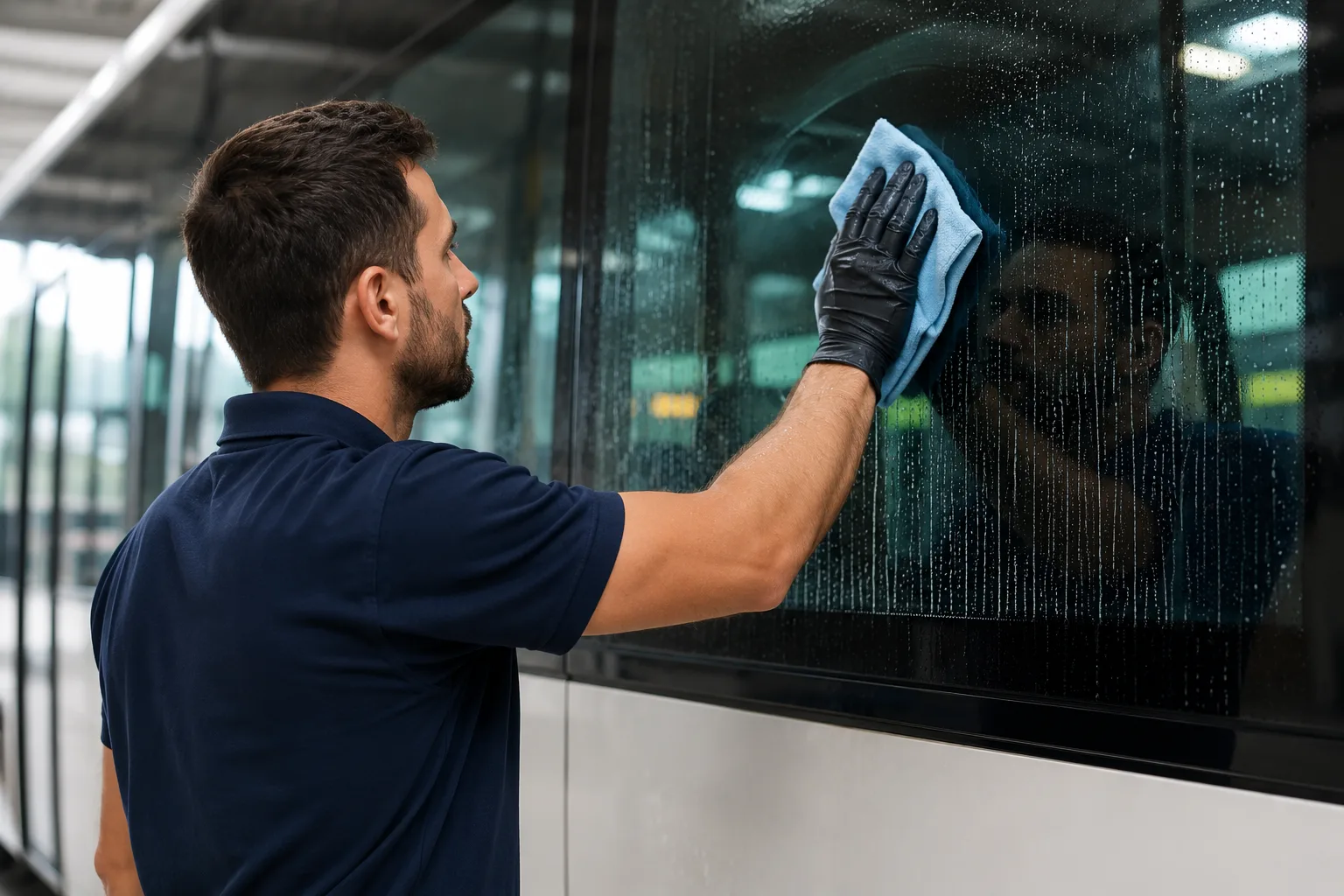
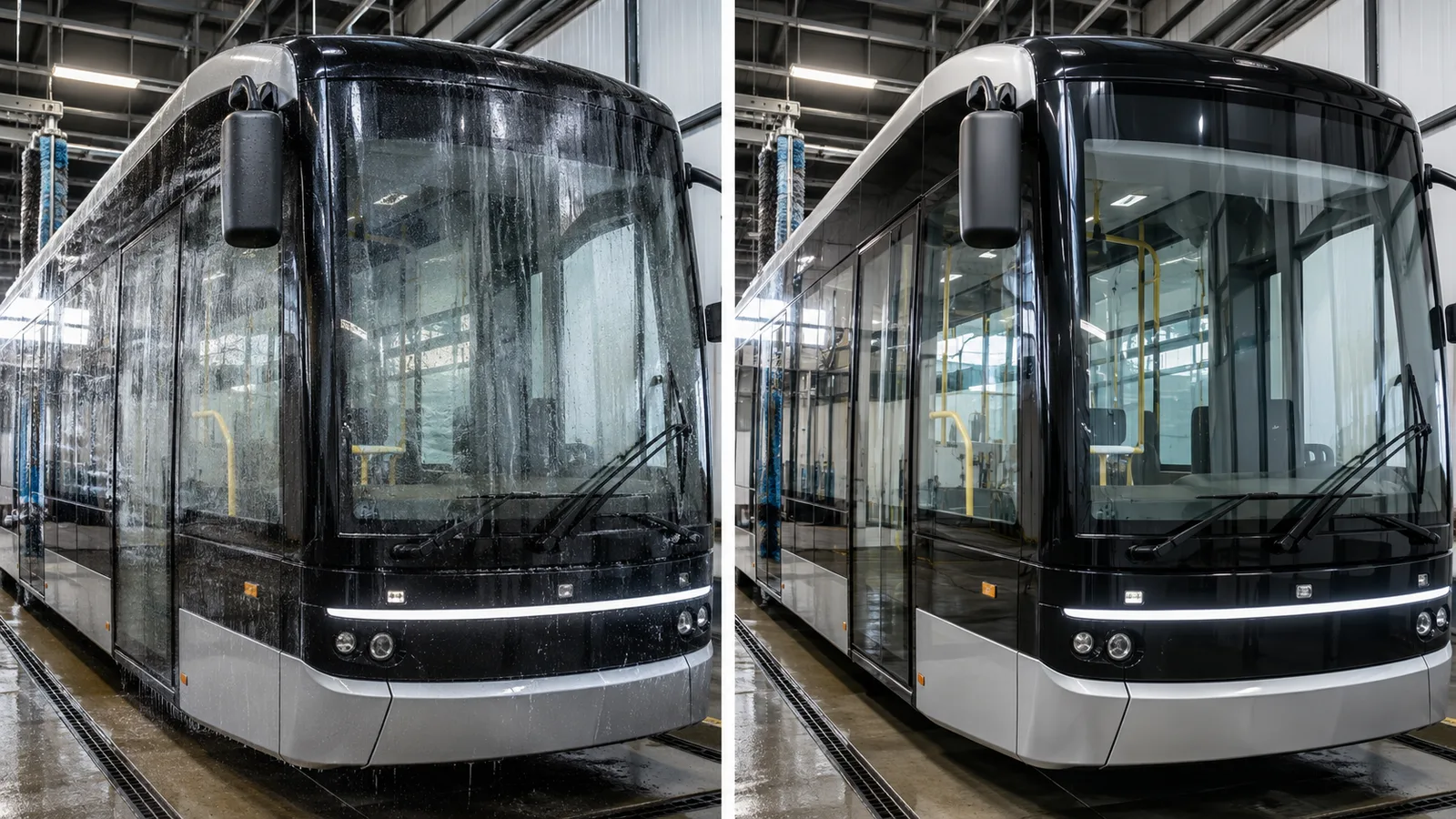
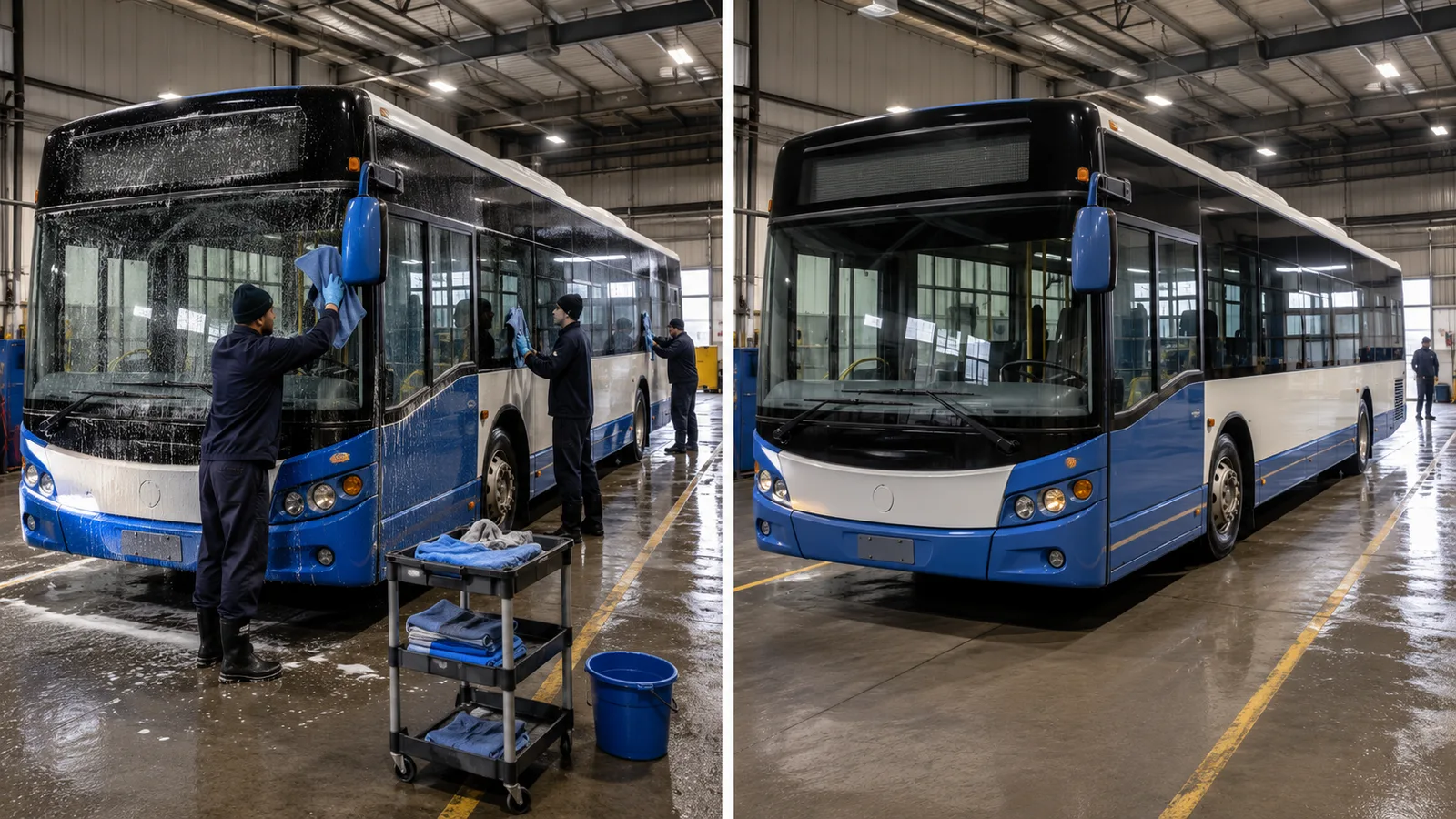
On the large glass surfaces of buses, trains and metros, water drops stay clearly visible and, as they evaporate, leave streaks and mineral deposits. In plants without forced-air ventilation systems, manual drying is often the only alternative: a slow, costly activity that is hard to perform uniformly over such large surfaces.
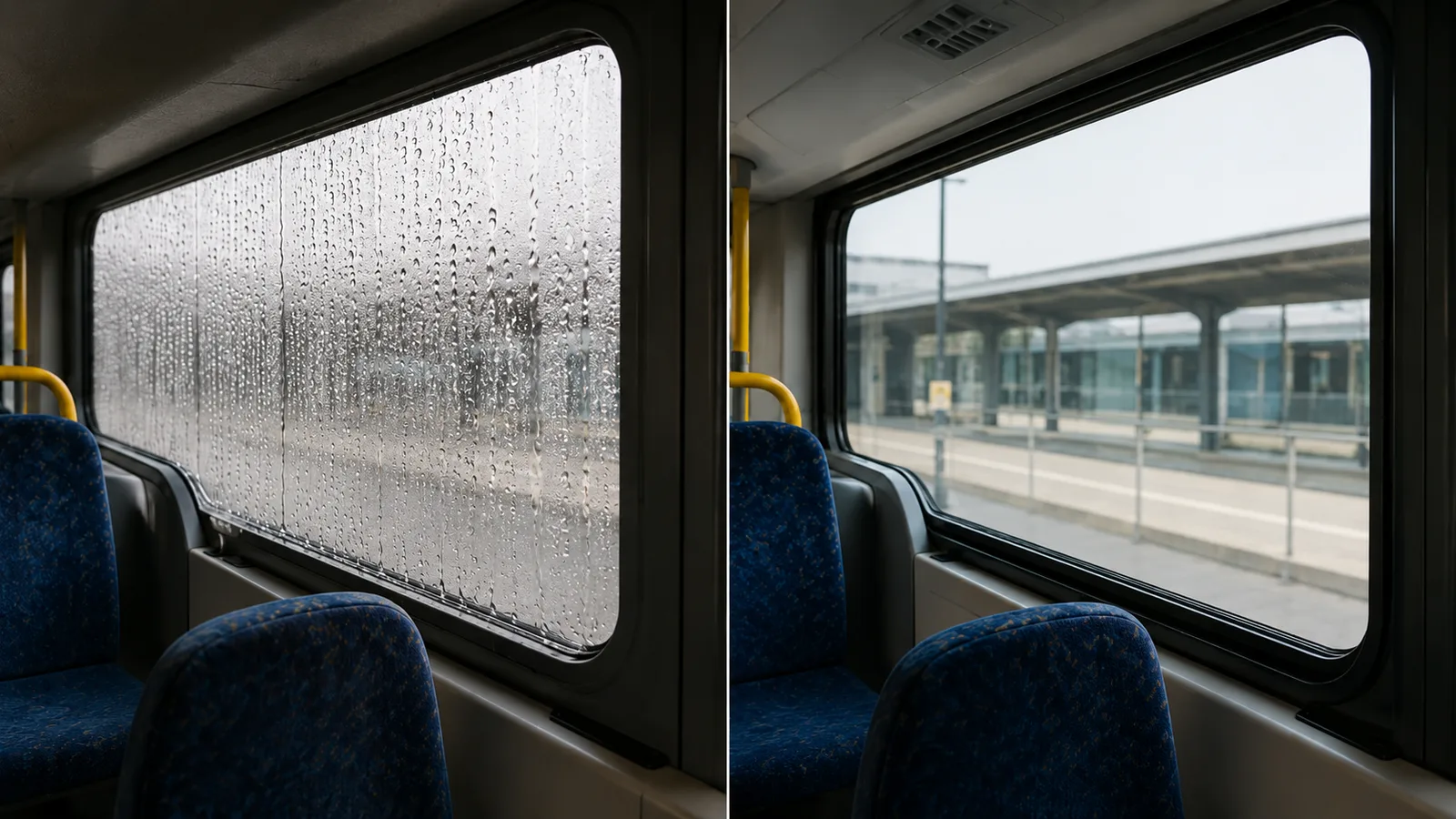
Drops on large glass

Drops on large glass

On buses, trains and metros the drops stay visible and, as they evaporate, leave mineral streaks exactly where perceived cleanliness matters most.

Plants without ventilation

Plants without ventilation

Where forced air is absent or ineffective, hydrophobic waxes cannot dry the surface.

Slow manual drying

Slow manual drying

It requires staff, time and cloths, with the risk of scratches and uneven results from one vehicle to the next.

New-generation polymer technology

AUTOSEC does not break water into drops. It carries it away in a single sheet.

Traditional hydrophobic waxes

Beading to be blown off

They break the water film into thousands of drops that must then be blown away with forced air. When air is absent or insufficient, the drops stay on the surface, evaporate locally and leave streaks and mineral residue, especially on the glass of buses and trains.

AUTOSEC · polymer technology

A continuous film that drains away

The functional polymers keep the water gathered in a continuous film and promote its fast, uniform retraction downwards, like a sheet pulled off the surface. No beading, no forced air, no streaks.

The four phases of the polymer action

1

Film spreading

The polymers spread the water into a continuous, uniform film, without fragmenting it into isolated drops.

2

Compact film

They keep the water gathered and prevent the beading typical of hydrophobic waxes.

3

Fast retraction

The high-speed polymer action retracts the film before evaporation can fix drops and streaks.

4

Sheet drainage

The water drains downwards like a sheet pulled off the surface, with no need for forced air.

Polymer technology and surface protection

Self-drying, protective polymer technology.

01

Low-foam polymer technology

AUTOSEC uses a polymer technology different from that of traditional drying agents. Its structure promotes a uniform distribution of water on the surface without generating persistent foam, allowing a continuous, easily drained film to form.

02

New-generation polymer protection

During application, the functional polymers anchor to the surface, forming a thin, uniform protective film. The surface stays protected without resorting to the strongly hydrophobic behaviour typical of traditional self-drying waxes, which fragment water into countless drops.

03

To be used with clean water

AUTOSEC must be diluted and delivered with clean water, preferably softened. It must not be used with recycled water, as residual detergents, contaminants and dissolved substances can interfere with the polymer technology and compromise the uniformity of the result.

04

Last step, no subsequent rinse

AUTOSEC is applied as the last step of the cycle on the already washed, still-wet surface. After application, the water film is left to drain with no further rinse.

Why choose AUTOSEC

The advantages for fleets, buses, trains and car rentals.
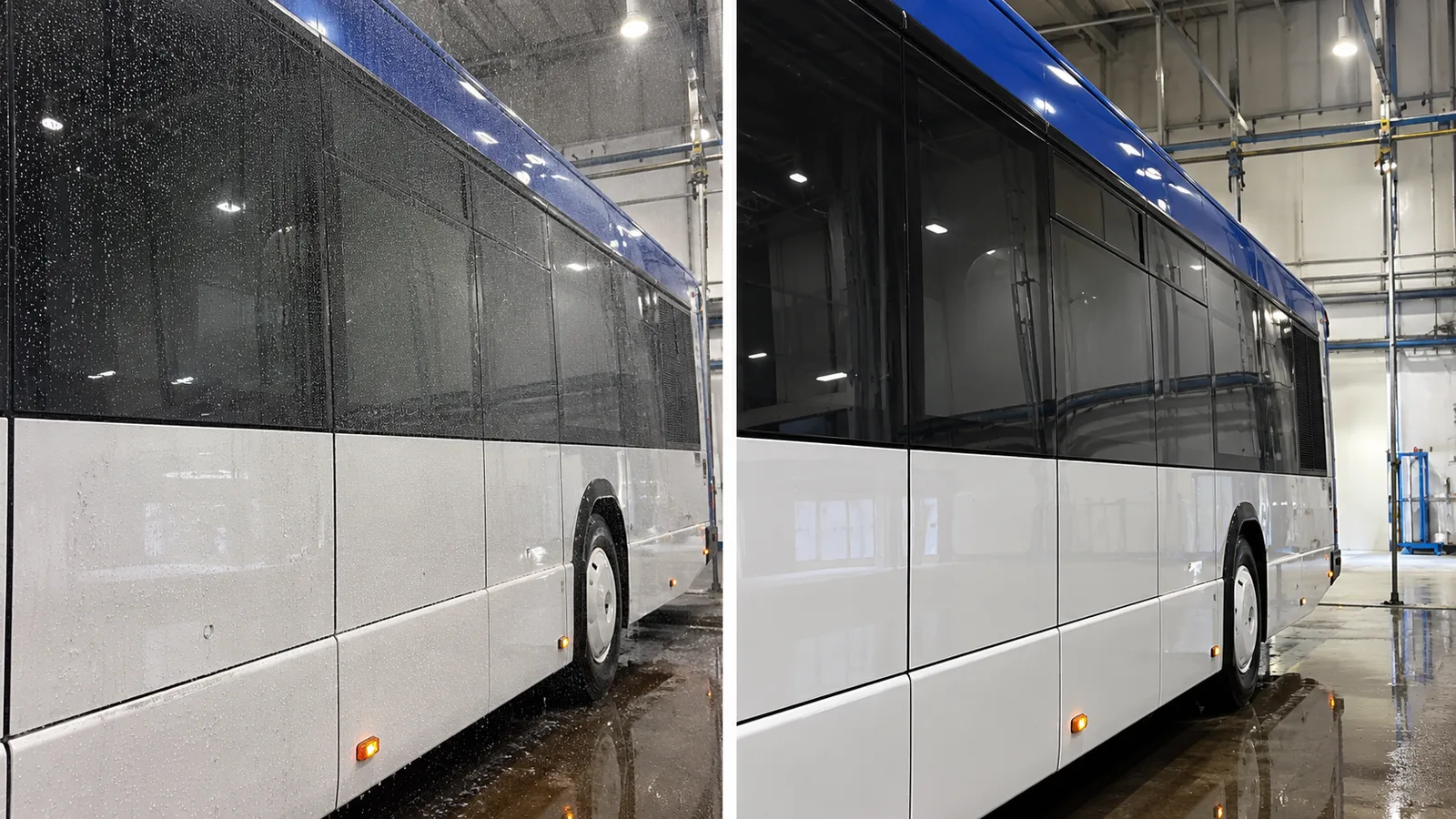
Works without forced air

Works without forced air

It dries uniformly even in plants without ventilation, where hydrophobic waxes fail. This is where AUTOSEC delivers the most.

Developed for large glass surfaces

Developed for large glass surfaces

It drastically reduces how long drops linger on windshields, side windows and vertical surfaces of buses, trains and metros, improving visual uniformity and the perceived cleanliness of the vehicle.

Less time and staff

Less time and staff

It reduces or eliminates manual drying, speeds up vehicle turnover and cuts cloths, scratches and complaints about drops and streaks.

Glass-surface maintenance

It reduces the extraordinary maintenance of glass surfaces.

Drops that repeatedly linger encourage the build-up of mineral deposits that, over time, can adhere strongly to the glass, compromising its transparency and visibility.

Removing them requires specific deep-cleaning and glass-polishing treatments, performed with dedicated products and equipment: lengthy, technically complex operations that require skilled staff and do not always allow the surface to be fully recovered.

By promoting water drainage and reducing how long drops linger, AUTOSEC helps limit the progressive build-up of these deposits.

Application and delivery

Last step, no rinse: applied on the wet surface and left to drain.

Recommended

Nozzle arch

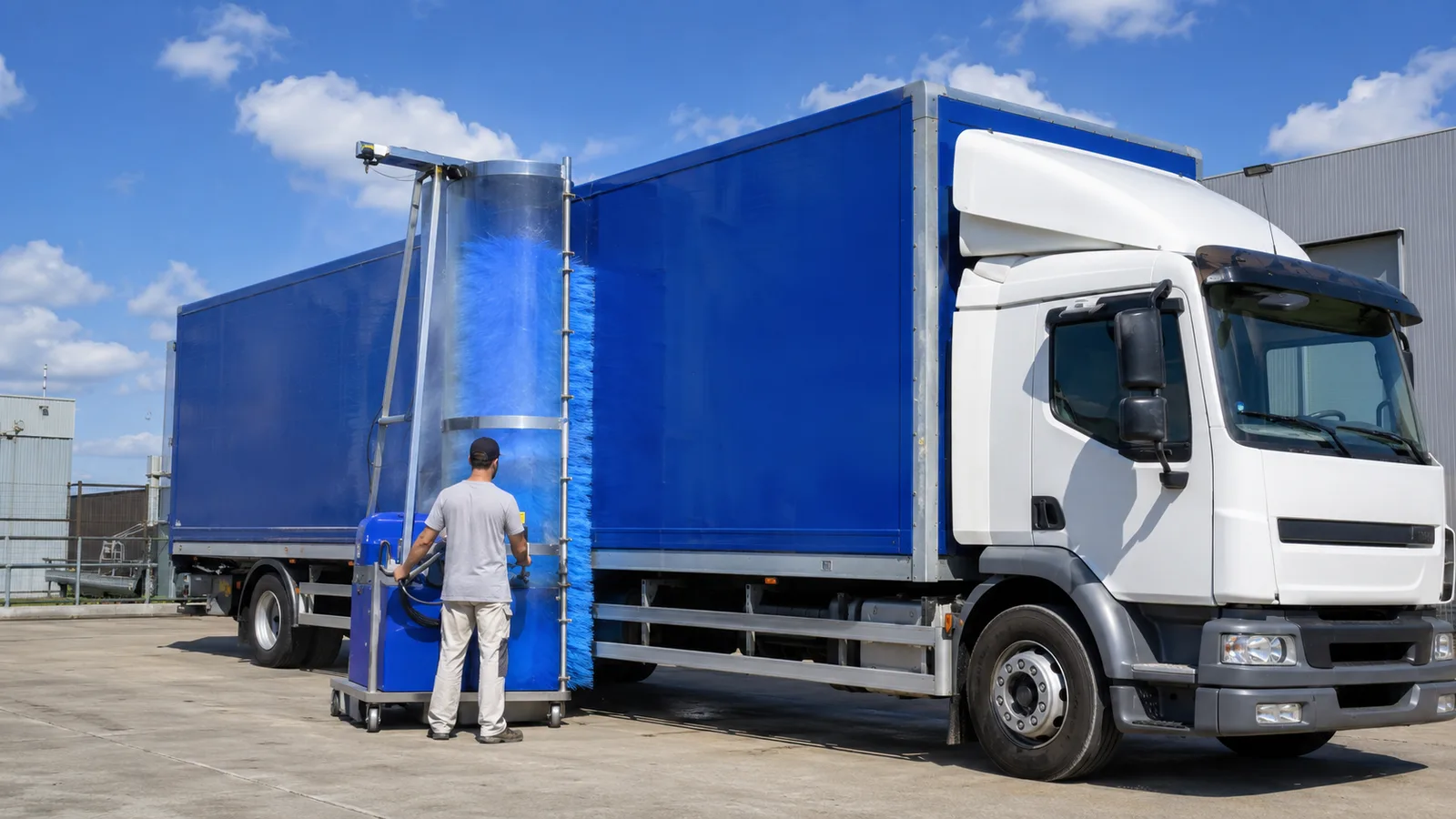
1 The primary method for buses, trains, trams, metros, trucks, fleets and automatic or semi-automatic plants.
2 Installed after the final detergent rinse, it covers roof, sides, glass, front and rear.
3 Full, even wetting, without excess quantities that would slow down drainage.
Manual

Sprayer

1 Suitable for manual applications, small vehicle fleets, car rentals, dealerships and trials.
2 Spray the diluted solution top to bottom, broadly and evenly.
3 Avoid an overly fine mist that the wind could disperse.
Trials

Watering can / gravity

1 Useful for initial tests and simple manual plants, with no dedicated arch or sprayer.
2 Pour the solution top to bottom, creating continuous coverage.
3 A simple but less precise method: best for trials or limited applications.
💡

Sequence and dosage: wash the vehicle, rinse the detergent completely, apply diluted AUTOSEC on the still-wet surface from top to bottom, do not rinse and let the film retract and drain. Do not apply the concentrated product directly. Dosage: 0.5% with medium-soft water (500 ml/100 L), 1% with medium-hard water (1 L/100 L).

Specifications

Technical sheet at a glance.

Type Concentrated hydrophilic drying agent
Technology New-generation polymer (fast spreading and drainage)
Mechanism Uniform retraction of the water film, sheet drainage
Dosage 0.5% medium-soft water · 1% medium-hard water
Application Last step, on the wet surface, no rinsing. Dilute with clean water, preferably softened (not recycled water)
Delivery Nozzle arch (recommended), sprayer, watering can
Formula New-generation polymer technology, no persistent foam, with surface protection
Residue Thin protective polymer film, no waxy or oily deposits
Plants Buses, trains, trams, metros, car rentals, fleets, trucks, manual/semi-automatic, body shops
Performance Fast action, effective even at high temperatures
ECONOMIC BENEFITS

Measurable benefits on operating costs and maintenance.

AUTOSEC reduces manual drying times, limits deposit build-up on large glass surfaces and helps increase plant productivity.

Less manual drying: reduces the time and staff needed to dry large glass surfaces.
More vehicles handled: reduces the time between washing one vehicle and the next.
Large glass surfaces: makes it easier to handle windshields, side windows and vertical surfaces that are hard to dry by hand.
Lower glass maintenance: reduces how long drops linger and limits the progressive build-up of streaks and mineral deposits.
Fewer specialist interventions: helps reduce the need for deep cleaning and glass polishing, which require time, specific products and skilled staff.
Better visibility: helps preserve the transparency of glass surfaces over time, important for both aesthetics and vehicle safety.
Last step of the cycle: applied after washing and requiring no further rinse.

Technical data

Physico-chemical characteristics.

Appearance Colourless liquid
pH 9.0
Density (g/mL) 1 g/mL
Solubility Dilutable in water
Dilution 1%

Frequently asked questions

Everything professionals ask about AUTOSEC.

Mainly for plants without forced-air ventilation: bus, train, tram and metro washing, public transport fleets, car rentals, dealerships, corporate fleets, trucks and commercial vehicles, manual or semi-automatic plants and body shops. It is not intended for tunnels or rollover portals already fitted with air blowers, where the function is handled by hydrophobic waxes combined with forced air.

Request a quote for your plant.

Tell us about your plant and your vehicles: we'll get back to you with dosages, delivery methods and a tailored price list for AUTOSEC.

Advice on plant and delivery
Dosage and time-saving assessment
Sampling and glass trial

By submitting, you agree to be contacted for commercial purposes relating to AUTOSEC.